

I remember vividly talking to my dad about how he got his first job and how the hiring process has changed. He laughed and said, “I saw a card in the newsagent’s window. It said ‘Apprentice wanted. Hard work, decent pay. Ring Mr Stanic.’ So my dad rang him, they met the next day, and my dad started work on Monday. And that was it. Mr Stanic told him the work was tough, the hours were long, but he’d teach him properly and pay him fairly. And that was enough for him to accept the job, as he knew exactly what he was getting into.
That simplicity forced a kind of honesty we’ve somehow lost.
Today, we have infinitely more tools to communicate what jobs involve: sophisticated job boards, employer branding campaigns, and detailed company profiles. We can write as much as we want. We can include videos, employee testimonials, and photo galleries of the office.
And yet, the average job advert tells candidates far less about the actual reality of working there than my dad’s handwritten card did forty years ago.
We’ve got better technology. But are we being more honest?
I don’t think so. And I think it’s costing us the best candidates.
The Job Advert That Scared Everyone (And Hired the Perfect Person)
Last year, I was working with a fintech scale-up in Amsterdam that needed a Senior Financial Analyst. Their CFO was terrified about being too honest in the job description.
“Dragana, what if we scare people away?” she asked, reviewing my draft. That was a fair point because there was a big change, and we will do exactly that. This is what we have written:
“Let’s be clear about what this role actually involves:
You’ll be building financial models in an environment where the business model is still evolving. That means your assumptions will change. Your forecasts will need constant revision. Some executives will love data-driven decisions; others will go with their gut and you’ll need to be okay with that.
You’ll be the most senior analyst on a small team, which means you’ll have influence, but you’ll also be doing hands-on work, not just managing. Some weeks, you’ll present to the supervisory board. Other weeks, you’ll be in Excel at 7 PM, closing the books.
If you need stability, clear processes, and a finance function that’s already figured everything out , we’re not there yet. But if you’re excited about building financial infrastructure from scratch and don’t mind the uncertainty that comes with it, we should talk.”
We got 60% fewer applications than their previous posting. 😯
But every single applicant who responded referenced specific challenges from the post. They asked smart questions about the company’s financial maturity. They understood what they were walking into.
We placed the candidate within a month. She’s still there, and when I asked her why she went with this opportunity, she responded: “I knew it would be messy. That’s exactly why I wanted it.”
But Will Anyone Actually Apply?
I can already hear the objection: “Does it really matter how we write job adverts? People who need jobs will apply regardless.”
Fair point. You’re absolutely right that you’ll get applications either way. But it’s not about whether people apply. It’s about who applies, who accepts your offer, and who’s still there when their probation period ends.
A generic advert attracts anyone looking for any job. An honest one attracts people looking for this job, with this team, solving these challenges. And that distinction? It shows up in your retention numbers, your team morale, and how many hiring cycles you’re running each year.
What Culture Actually Looks Like in a Job Advert
After years of recruiting everyone from software engineers to general counsels across the UK and Europe, here’s what breaks my heart: most job adverts sound like they were written by someone who’s never actually talked to the team they’re hiring for.
Let me show you what I mean with real examples from roles I’ve placed:
The Generic Version (Software Engineer): “We offer a competitive salary and a comprehensive benefits package.”
The Human Version: “We pay senior engineers between £80K-£95K base (yes, we’re putting the range right here) plus equity, because we believe people do their best work when they’re not worried about their mortgage. We provide private healthcare through Vitality, 25 days holiday plus bank holidays, and a meaningful pension contribution — not as perks, but because these things matter.”
The Generic Version (Corporate Solicitor): “Fast-paced environment with exposure to complex legal matters.”
The Human Version: “You’ll be the second solicitor on a legal team supporting a company that’s scaling quickly. Some days you’ll draft commercial contracts. Some days you’ll be on a call with our CEO explaining why we can’t ‘just figure it out later’ on GDPR compliance. Some weeks you’ll work 40 hours. Some weeks it’ll be 55. We’re honest about when we’re asking for a push, and we protect your time when things calm down.”
See the difference? One is ticking a box. The other is showing you respect the candidate’s intelligence.
The Generic Version (Data Analyst): “Seeking a team player who thrives in collaborative environments.”
The Human Version: “Our product and engineering teams have very different ideas about what our data is telling us. You’ll be in the middle of those conversations, and they can get heated. We need someone who can hold their ground with data, handle disagreement without taking it personally, and help us make better decisions even when not everyone agrees. If you need consensus to feel comfortable, this role will be challenging. If you like being the person who brings clarity to debate, you’ll thrive.”
One tells you nothing. The other tells you exactly what your days will look like.
The Red Flags You’re Accidentally Waving
Let me tell you about a software engineer I placed a few years ago.
He applied to a job that said: “We’re looking for a full-stack engineer who can wear many hats in our fast-paced, entrepreneurial environment.”
It sounded exciting. He accepted the offer. By month three, he rang me, frustrated. “Dragana, ‘wear many hats’ means I’m doing frontend, backend, DevOps, and somehow I’m also responsible for customer support escalations. And ‘fast-paced’ means they change priorities every week, and I never finish anything.”
He left after seven months, burned out and disillusioned. When I spoke to the hiring manager, he was genuinely confused. “But we told him it was entrepreneurial!” No. You told him it was exciting. You didn’t tell him it was chaotic and under-resourced.
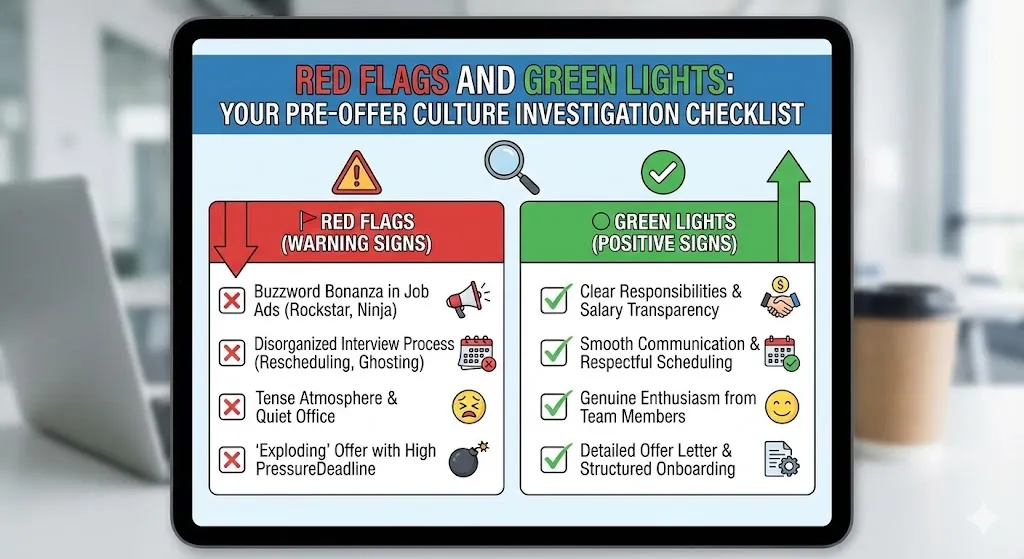
Here’s what I’ve learned these phrases actually signal to the candidates I work with across Europe:
“Wear many hats” in engineering roles often means: “We’re understaffed and haven’t defined this role clearly. You’ll be doing three jobs.”
“Work hard, play hard” in finance or law usually means: “Expect 50+ hour weeks, but hey, we have a table football!”
“Rockstar/Ninja/Guru” for technical roles suggests: “We don’t actually understand what good engineering looks like, and we probably have a culture problem.”
“Flexible working” for analysts without clarification can mean: “You can choose which 40 hours per week to work, as long as you’re available when we need you.”
I’m not saying these phrases always mean these things. I’m saying that when you’re vague, top candidates assume the worst, because they’ve been burned before. And the candidates you actually want? They’re experienced enough to spot these red flags from a mile away.
The Culture Questions Your Job Advert Should Answer (Before You Hit “Publish”)
If you are a hiring manager, before you write a single word of the job advert, please answer these questions for yourself:
- What does success actually look like after 90 days? After a year?
For a software engineer: Shipping their first feature? Understanding the codebase? Leading a project?
For a financial analyst: Building a forecasting model? Owning monthly reporting? Influencing strategy? - What type of person tends to struggle here, and why?
Engineers who need perfect documentation? Analysts who can’t handle ambiguity? Solicitors who need senior guidance? - What’s the actual day-to-day like?
How many meetings? How much deep work time? What’s the balance between strategic and tactical? - How does this team handle conflict? Feedback? Failure?
When an engineer ships a bug, what happens? When an analyst’s forecast is way off? When a solicitor misses something? - What are you actively working to improve?
Technical debt you’re addressing? Process gaps you’re fixing? Culture issues you’re tackling?
If you, as a hiring manager, can’t answer these clearly, don’t write the job post yet. Because it is better to place no one than place the wrong person.
Your Next Move
Pull up the last job advert you worked on, or the one you’re about to post. Read it as if you’re a senior candidate who’s seen hundreds of these.
Ask yourself:
- Would I understand what this job actually entails day-to-day?
- Am I being honest about the challenges, or just highlighting the exciting parts?
- Does this sound like a real company, or corporate marketing?
- If someone accepted based on this advert and showed up on day one, would they feel misled?
If you’re cringing a little, you’re not alone. Most job adverts I see need this kind of overhaul. The good news? This is fixable. You can start writing adverts that treat candidates like the intelligent professionals they are, people who can handle reality and actually prefer it. And when you do, something shifts: you get fewer applicants, but better fits. You spend less time screening people who would’ve been wrong from the start. You place candidates who stay.
Because here’s what I’ve learned in this work: culture isn’t something you describe in a job advert. It’s something people experience every single day. But the job advert is where you show candidates you understand the difference between selling a fantasy and offering a real opportunity.
So tell the truth. The whole, complicated, imperfect truth.
Just like Mr. Stanic did with his handwritten card all those years ago, except now, you’ve got the space to tell the whole story. The right candidates, the ones who’ll actually thrive with you, will appreciate it. And they will stick around.